December 4
Matthew 1:18-23
18 Now the birth of Jesus the Messiah took place in this way. When his mother Mary had been engaged to Joseph, but before they lived together, she was found to be pregnant from the Holy Spirit. 19 Her husband Joseph, being a righteous man and unwilling to expose her to public disgrace, planned to divorce her quietly. 20 But just when he had resolved to do this, an angel of the Lord appeared to him in a dream and said, “Joseph, son of David, do not be afraid to take Mary as your wife, for the child conceived in her is from the Holy Spirit. 21 She will bear a son, and you are to name him Jesus, for he will save his people from their sins.” 22 All this took place to fulfill what had been spoken by the Lord through the prophet: 23 “Look, the virgin shall become pregnant and give birth to a son, and they shall name him Emmanuel,” which means, “God is with us.”
God with Us
by Felipe Hinojosa, Ph.D.
This story reminds me of God’s faithfulness and how when we organize, when we collectively move together on behalf of our communities, when we share meals, when we share our possessions, when we are in communion with one another, when we do all these things, we find freedom in God who promised to always be with us.
There I was at the restaurant, La Fonda Boricua, in the historic neighborhood of East Harlem where Puerto Ricans first settled in the years after World War II. I was there to meet Felipe Luciano, a former member of the Young Lords, a Puerto Rican radical organization (the Puerto Rican version of the Black Panthers). We met to talk about the significance surrounding the moment when the Young Lords took over the First Spanish United Methodist Church on December 28, 1969.
In the late 1960s the Young Lords emerged as a radical organization concerned with urban poverty, public health, and anti-Latino racism. The young women and men that made up the Young Lords came from East Harlem, some were former gang members, some were college students, all were brilliant. They were Puerto Rican, but also African American, Mexican, Dominican, and Cuban. They were idealists, but pragmatic in their approach to solving problems. They wanted to change the world.
In response to the urban crisis of the 1960s, the Young Lords looked to their neighborhood church, the First Spanish United Methodist Church, as a possible place to host breakfast programs, establish a medical clinic, and create a gathering space to read poetry. After all, the church was mostly empty Monday through Saturday. But permission to use the church proved difficult. The pastor of the church rejected the offer from the Young Lords to use their church as a space to offer community services. After conversations with the church went nowhere, the Young Lords took over the building. The takeover was as peaceful as it was dramatic, a wooden sign with red lettering dangled from a window for everyone in the neighborhood to see: “La Iglesia De La Gente—People’s Church.” In only a matter of days, the Young Lords transformed the inside of the church into an art space, a medical treatment area, an area for the breakfast program, and a gathering space for the community. Whatever ideas people had about the Young Lords were quickly dashed by the fact that television cameras showed them—wearing dark shades and berets—serving breakfast, offering free medical care, folding clothes, and quoting scripture. The occupation ended on January 7, 1970, eleven days after the Young Lords first occupied the church. Eight members of the Young Lords did appear before a judge but charges were eventually dropped as Methodist ministers from across the country stepped in to defend what the Young Lords had done, calling them apostles of change.
I sat and listened to Felipe Luciano tell me this story during the interview with all the flare of a Pentecostal preacher. Toward the end of the interview, with tears in his eyes, he leaned in close to me, and said, “this was a beautiful moment inside that church, we owned it, we supported it, we nurtured it… we took care of our kids, and we were free. We had rallies, we read poetry, we served people, and we were free inside that church…God was with us.”
About the Author
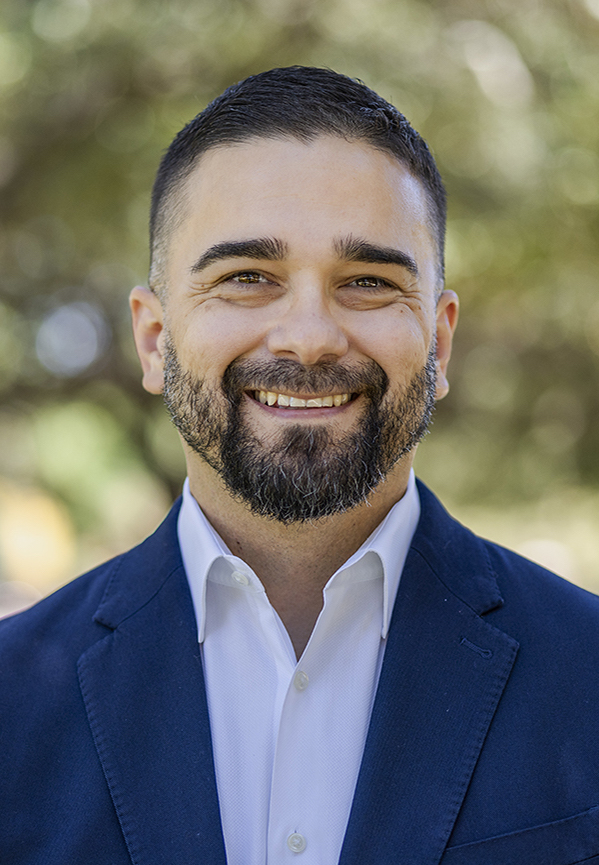
Felipe Hinojosa, Ph.D.
Felipe Hinojosa, Ph.D., joined Baylor University’s faculty in 2023 as the inaugural holder of the John and Nancy Jackson Chair in Latin America, expanding Baylor’s international footprint and providing additional leadership to advance the priorities of the Baylor in Latin America initiative.
He came to Baylor from Texas A&M, where he served as professor of history, assistant provost for Hispanic Serving Institution (HSI) initiatives and director for the Carlos H. Cantu Hispanic Education & Opportunity Endowment.
A civil rights historian, Hinojosa’s research focuses on Chicana/o and Latina/o studies, American religion, race and ethnicity and social movements. The son of a Mennonite pastor in the Texas/Mexico borderlands, he was exposed to the power of the Gospels and how communities can harness religion and politics at the grassroots level to do good and implement change. The author of two books, He is working on a third about the Latino civil rights movement and its impact in a post-World War II America. He also served as co-editor of Faith and Power: Latino Religious Politics Since 1945 (NYU Press, 2022).